Mukteshwar · getting-there
A small, high, quiet town in the Kumaon hills with a long working past. Here is what Mukteshwar gives you if you plan to stay more than a weekend.
Why Mukteshwar? Because it is high, quiet and small, and it has been a place for careful, focused work for well over a century.
If you are picking a base in Kumaon for a few weeks of work, that is the short answer. The rest of this post is the longer one.
The town takes its name from the Mukteshwar Dham, a Shiva temple on the high point of the town. It is said to be about 350 years old. Treat that as local tradition, not a surveyed date.
The other thing the town is known for is science. In 1893 the Imperial Bacteriological Laboratory moved up from Pune to this ridge. The Indian Veterinary Research Institute (IVRI) says the site was picked for its salubrious climate, unpolluted natural environment and cold climate, which suited the making of vaccines and sera. The campus is still here.
So this is a town that was chosen, on purpose, for clean air and quiet work. That is a decent history for a place you want to open a laptop in.
Jim Corbett fans may know the name too. Muktesar appears in his book The Temple Tiger and More Man-Eaters of Kumaon, which includes the story of the Muktesar man-eater.
Quoted heights for the town vary, from about 2,170 to 2,290 m depending on the source and where in town you measure. The Nainital district site gives 2,286 m. We are not going to pick one. What matters is the feel: high in the Kumaon hills, cooler than the plains by a good margin, with clear air on a good day.
Height affects people differently. If you are unsure how you will feel, ask locally and check current conditions before you go.
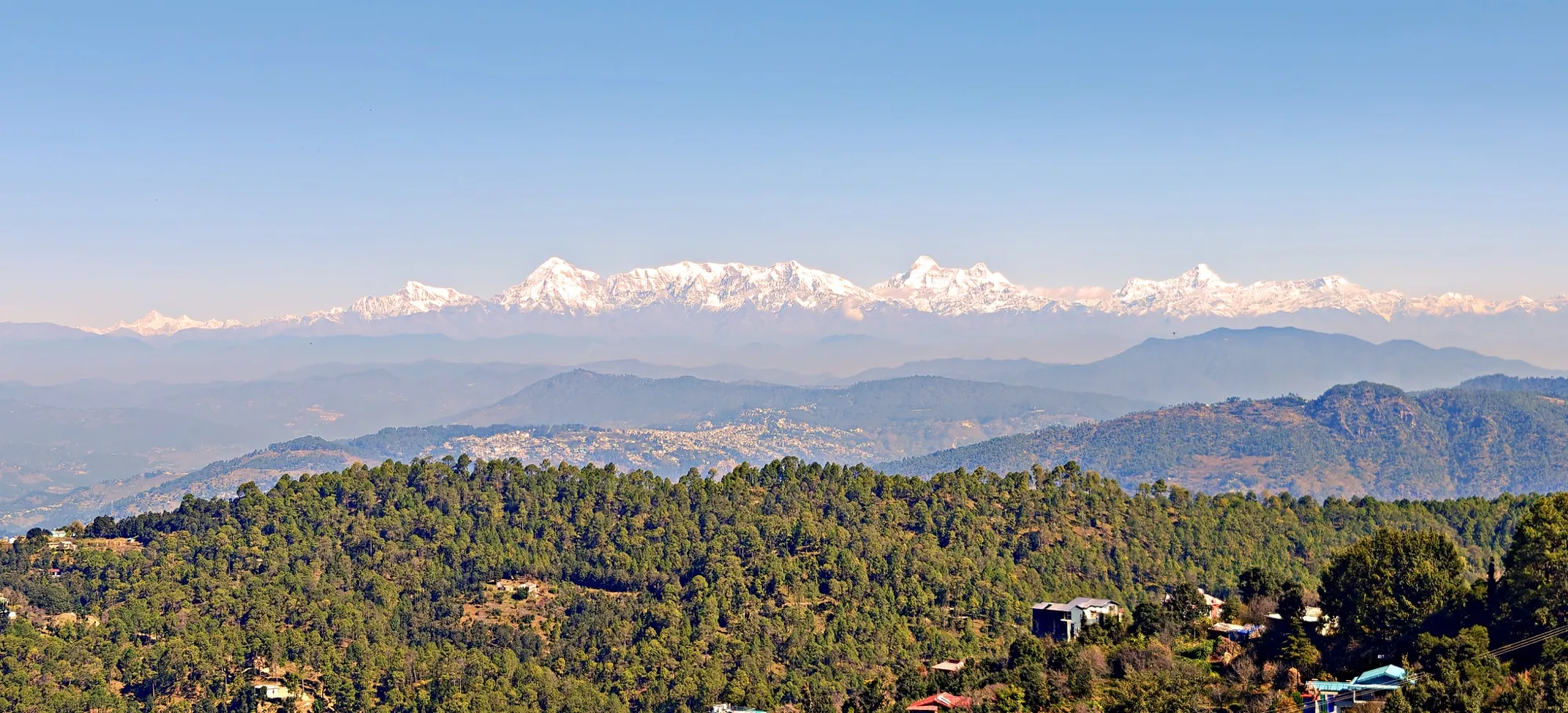
The district site describes Mukteshwar as surrounded by fruit orchards and thick coniferous forest, overlooking long ranges of the Himalaya. The IVRI page itself mentions views of Nanda Devi, Trisul and Panchuli (their spellings).
We ran our own terrain analysis for the house. As far as it shows, on a clear day the line of sight takes in Nanda Ghunti, Trishul, Nanda Devi, Nanda Kot and Panchachuli, roughly 90 to 110 km away. We say “on a clear day” and we mean it. Cloud and haze can hide all of it, monsoon most of all.
The district site describes thick coniferous forest and fruit orchards, which means birdsong in the morning and not much traffic. There are short walks close to the temple and to Chauli Ki Jali, a set of overhanging cliffs near the temple that people use for rock climbing and rappelling. Our Explore guide lists what is nearby, and we will give you walking times once we have measured them ourselves.
Wildlife is real here. Ask locally before walking at dawn, dusk or after dark.
Nainital, Bhimtal, Ramgarh and Almora are all good bases, and you may already know them. Compared with them, Mukteshwar is higher, usually quieter and smaller.
The trade-offs are honest ones. It is further up the hill, so the road takes longer, and there are fewer shops and fewer places to eat out. If you want a row of cafes and a lake to walk round, a lake town suits you better. If you want to wake up, make chai and look at a range, this is the one.
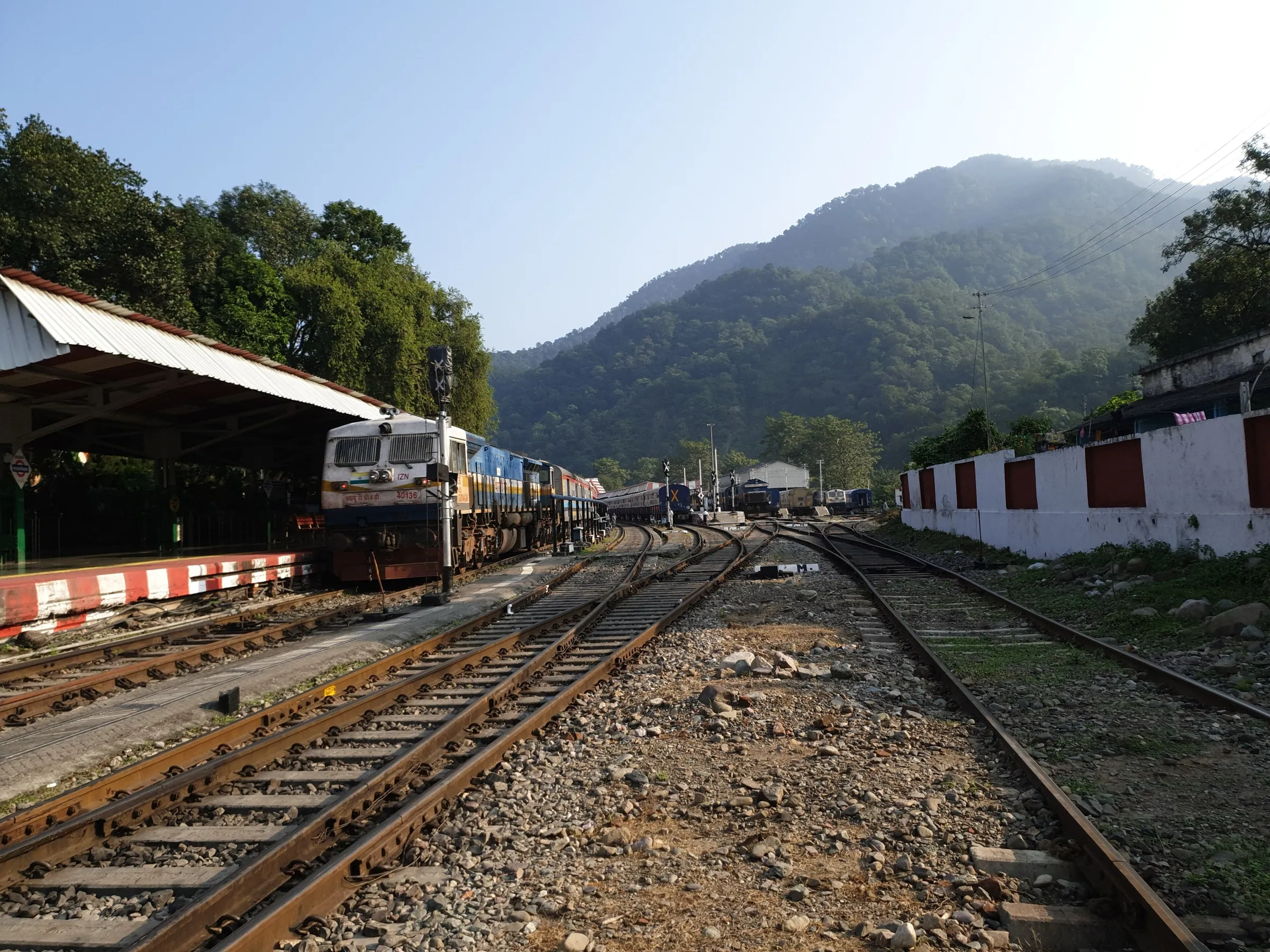
Travel times and road conditions change, so check before you travel. Kathgodam is the nearest station, and the road continues from there.
Quiet is only half of it. You also need things to work:
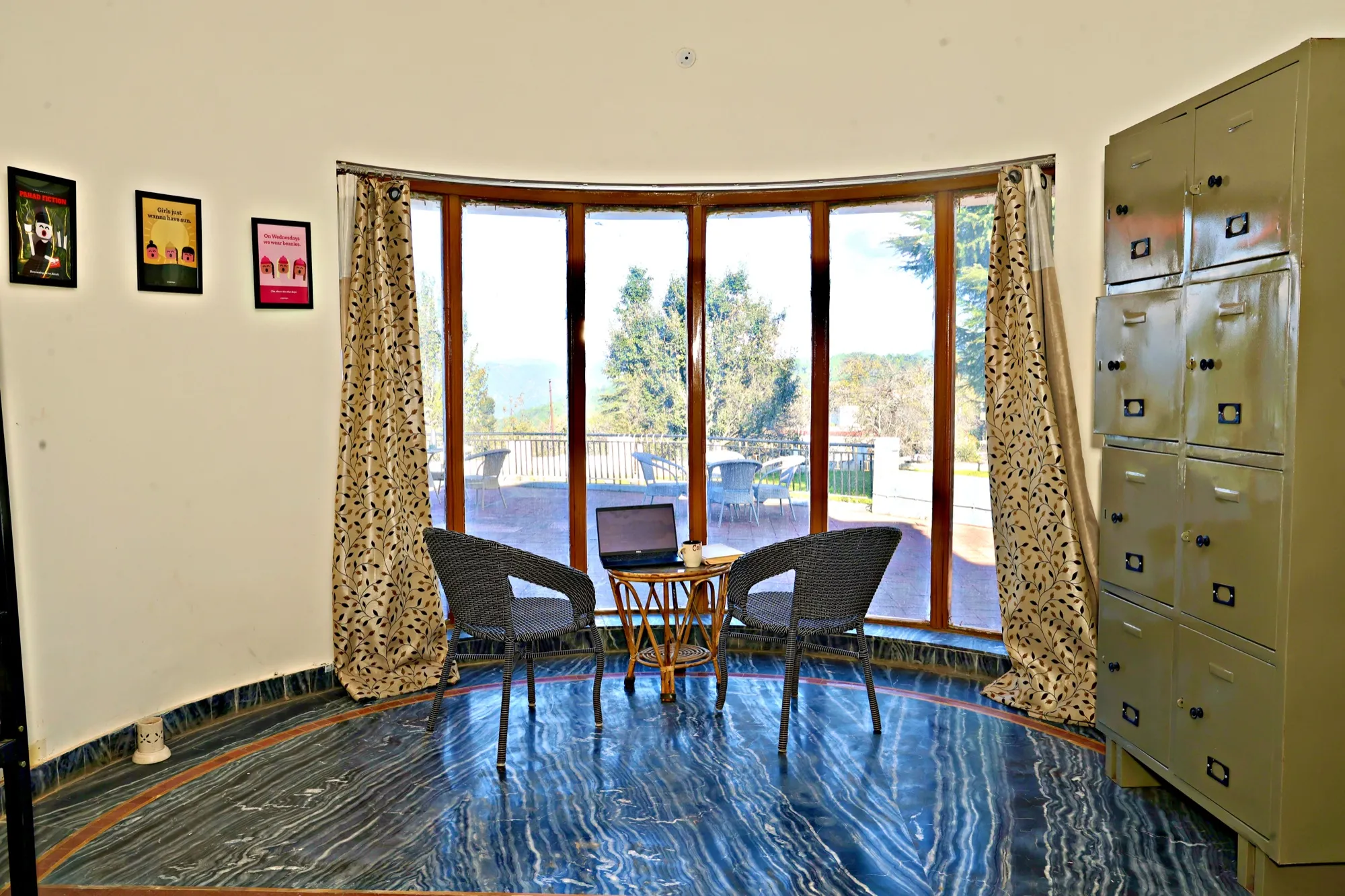
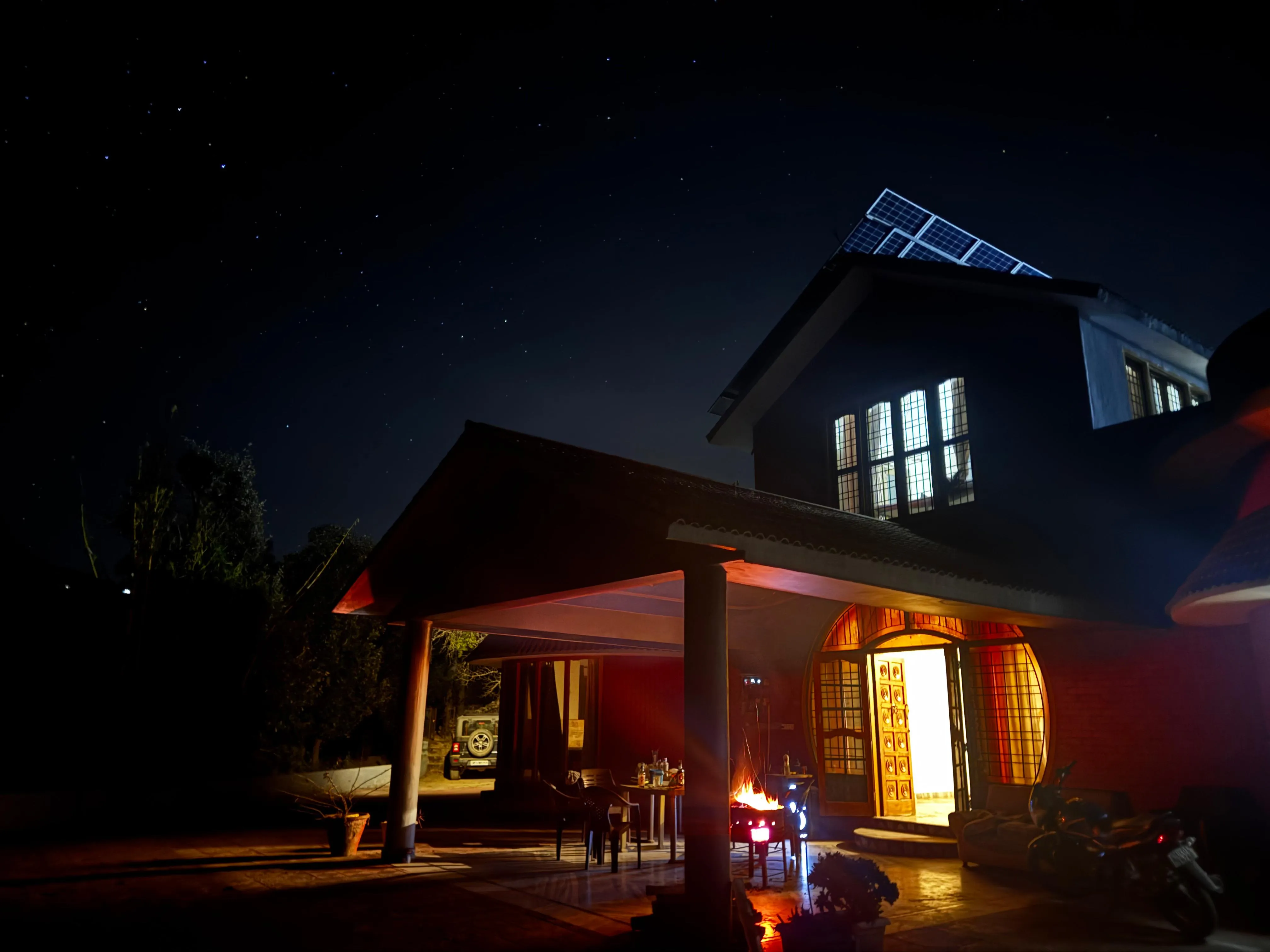
The house has three private rooms (Pine, Suite and Quad Room / Family) and two dorms (Mixed Dorm and Female-Only Dorm). A rooftop Sky room is opening later. Everything is on the Yappstays Mukteshwar page, and the work page explains how a working stay runs.
If the place sounds right, look through the house and rooms and see which one suits your stay. Questions about dates or group size go to us on WhatsApp, and a yapper will reply.